
A fire alarm usually beeps because of a low battery, dust inside the unit, an expired alarm, a power issue, or a system trouble signal. If the alarm is loud and continuous, treat it as a real emergency. Leave the building and call 911.
If it is chirping every 30-60 seconds, it is more likely a maintenance issue. In that case, check the battery, clean the unit, press the silence or reset button, and check the manufacture date. If the beeping is coming from a commercial fire alarm panel, call a fire alarm professional instead of trying to disable the system.
For businesses, apartment buildings, restaurants, and commercial properties, repeated beeping should not be ignored. LHR Fire Protection provides fire alarm services for properties across New Hampshire, northern Massachusetts, and southern Maine.
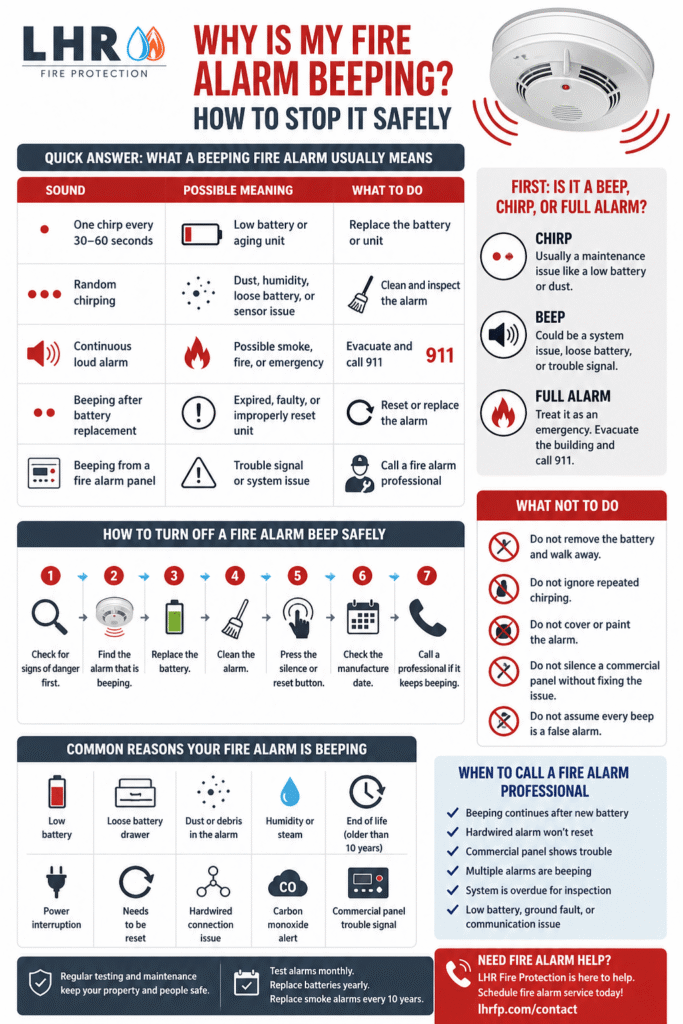
Quick Answer: What a Beeping Fire Alarm Usually Means
A beeping fire alarm can mean different things depending on the sound.
Sound | Possible Meaning | What to Do |
One chirp every 30–60 seconds | Low battery or aging unit | Replace the battery or unit |
Random chirping | Dust, humidity, loose battery, or sensor issue | Clean and inspect the alarm |
Continuous loud alarm | Possible smoke, fire, or emergency | Evacuate and call 911 |
Beeping after battery replacement | Expired, faulty, or improperly reset unit | Reset or replace the alarm |
Beeping from a fire alarm panel | Trouble signal or system issue | Call a fire alarm professional |
The key is to identify whether you are hearing a small chirp, a repeated beep, or a full alarm. Those sounds do not always mean the same thing.
First: Is It a Beep, Chirp, or Full Alarm?
Before trying to turn off a fire alarm, listen carefully.
A chirp is usually short and spaced out. It may happen every 30 seconds, 60 seconds, or at random intervals. This often points to a low battery, dirty sensor, loose battery drawer, or an alarm near the end of its life.
A beep may be more frequent and harder to ignore. It may still be a battery or sensor issue, but it can also come from interconnected alarms or a fire alarm panel.
A full alarm is loud, urgent, and continuous. If you hear that sound, do not assume it is false. Leave the building first. Look for signs of smoke, fire, burning odors, or other danger only if it is safe to do so.
In short: if it sounds like an emergency, treat it like one.
Why Is My Fire Alarm Beeping?
Your fire alarm may be beeping for several reasons. Some are simple. Others need professional service.
Here are the most common causes.
1. The Battery Is Low
A low battery is one of the most common reasons a fire alarm starts chirping.
Many smoke alarms chirp every 30–60 seconds when the battery is weak. This is the alarm’s way of telling you it may not have enough power to work properly.
To fix it:
- Open the battery compartment.
- Remove the old battery.
- Install a new battery recommended by the manufacturer.
- Close the battery drawer fully.
- Press the test button to make sure the alarm works.
Do not remove the battery and leave the alarm disabled. A smoke alarm with no working battery cannot protect the building.
2. The Battery Drawer Is Loose
Sometimes the battery is not the problem. The battery may simply be loose, crooked, or not fully connected.
This can happen after a battery change. If the drawer does not close properly, the alarm may keep chirping even with a new battery.
Remove the battery, reinstall it correctly, and make sure the drawer clicks into place.
3. Dust or Debris Is Inside the Alarm
Dust, small insects, dirt, or debris can interfere with the sensor. This can make the alarm chirp or behave unpredictably.
Try cleaning the alarm gently.
Use a soft brush, dry cloth, or vacuum attachment around the outside vents. Do not spray cleaners, water, or chemicals into the alarm.
If the alarm is in a dusty area, near construction work, or close to an HVAC vent, cleaning may help stop the beeping.
4. Humidity, Steam, or Temperature Changes Are Affecting It
A fire alarm placed too close to a bathroom, kitchen, laundry room, furnace area, or unconditioned space may react to humidity, steam, or temperature swings.
This does not always mean the unit is broken. It may be installed in a poor location.
If the beeping happens after showers, cooking, or sudden weather changes, the alarm may need to be cleaned, relocated, or replaced with a better-suited model.
5. The Alarm Is Near the End of Its Life
Smoke alarms do not last forever.
The U.S. Fire Administration recommends replacing the entire smoke alarm every 10 years, and hardwired alarms also need their backup batteries replaced at least once a year.
Check the manufacture date on the back or side of the alarm. If the unit is around 10 years old, replacing the battery may not solve the problem.
At that point, the safest fix is to replace the alarm.
6. There Was a Power Interruption
Hardwired fire alarms often have backup batteries. If the power goes out, flickers, or returns after an outage, the alarm may chirp or need to be reset.
This can also happen after electrical work, a tripped breaker, or a loose connection.
If the alarm is hardwired and keeps beeping after the battery has been replaced, there may be an electrical issue or a system-level problem.
7. The Alarm Needs to Be Reset
Some alarms continue beeping after you replace the battery until they are reset.
Look for a test, hush, silence, or reset button. Press and hold it according to the manufacturer’s instructions.
If the alarm is interconnected, resetting one alarm may not solve the issue if another unit in the system is causing the beep.
8. It Is a Carbon Monoxide Alert
Some devices combine smoke detection and carbon monoxide detection.
If your alarm is a combination unit, check the sound pattern and label. A carbon monoxide alert can sound different from a low-battery chirp.
Do not ignore it. Carbon monoxide is dangerous and may not have a smell, color, or visible warning sign.
If you suspect carbon monoxide, leave the building immediately and call emergency services.
9. A Commercial Fire Alarm Panel Has a Trouble Signal
In commercial buildings, the beeping may not come from a ceiling-mounted alarm. It may come from the fire alarm control panel.
That usually means the system has a trouble condition.
Possible causes include:
- Low backup battery
- AC power loss
- Wiring fault
- Communication failure
- Disabled device or zone
- Ground fault
- Dirty detector
- Sprinkler supervisory signal
- Device malfunction
- Missed inspection or service issue
This is different from a basic household smoke alarm chirp. A commercial panel is part of a larger life-safety system. If it is beeping, it needs to be checked.
For commercial properties, a fire alarm inspection can help identify the cause and restore the system to proper working condition.
How to Turn Off a Fire Alarm Beep Safely
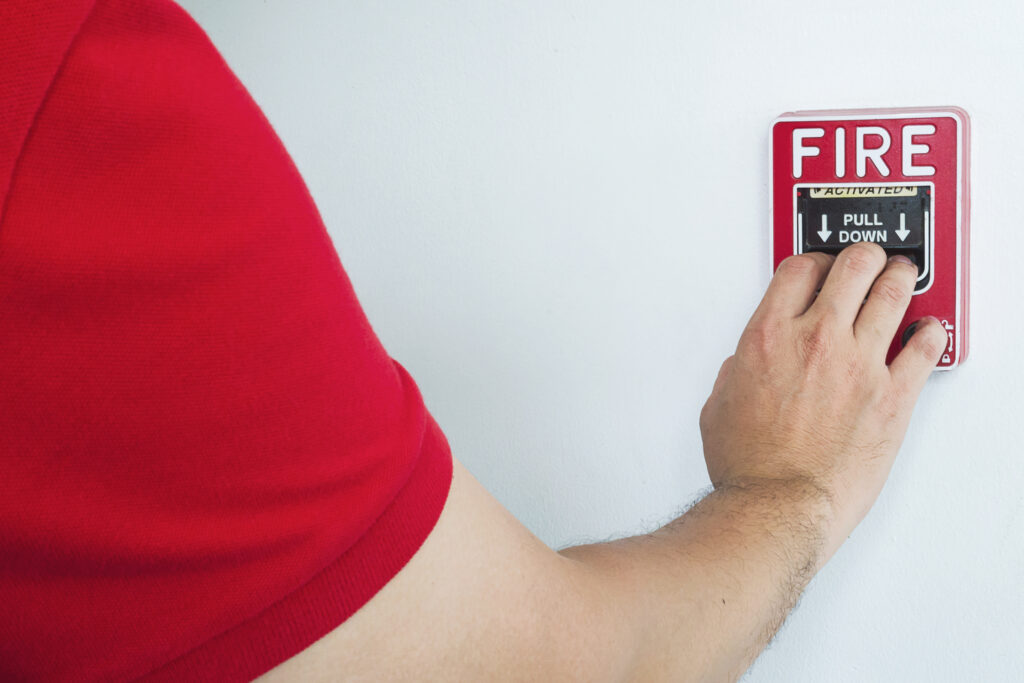
If you are trying to figure out how to turn off a fire alarm beep, start with safety first.
Do not silence an alarm until you know there is no fire, smoke, gas, or immediate danger.
Follow these steps.
Step 1: Check for Signs of Danger
Look and smell for warning signs.
Check for:
- Smoke
- Flames
- Burning smell
- Electrical odor
- Overheated appliances
- Unusual heat
- Carbon monoxide warning
- People reporting symptoms such as dizziness or nausea
If there is any sign of danger, leave the building and call 911.
Step 2: Find the Alarm That Is Beeping
If you have multiple alarms, walk through the building and listen carefully.
The loudest chirp may not always be where you expect. In interconnected systems, one alarm may trigger others.
Check:
- Bedrooms
- Hallways
- Stairways
- Basements
- Utility rooms
- Garages
- Commercial corridors
- Mechanical rooms
- Near the fire alarm panel
Once you find the source, you can troubleshoot the right device.
Step 3: Replace the Battery
If the alarm uses a replaceable battery, install a new one.
Use the battery type recommended by the manufacturer. Do not mix old and new batteries, and do not use damaged batteries.
After replacing it, press the test button.
If the alarm still chirps, check whether the battery drawer is fully closed.
Step 4: Clean the Alarm
Dust can cause false chirping or sensor trouble.
Gently clean around the vents using a dry cloth, soft brush, or vacuum attachment.
Do not paint the alarm. Do not cover it. Do not use sprays or water.
Step 5: Press the Silence or Reset Button
Most alarms have a silence, hush, test, or reset button.
Press and hold the button. The exact time depends on the model.
If the alarm stops briefly and then starts again, there may still be a battery issue, sensor problem, or end-of-life warning.
Step 6: Check the Manufacture Date
Remove the alarm from its base and look for the date printed on the back or side.
If it is about 10 years old, replace the unit. USFA recommends monthly testing and replacing smoke alarms every 10 years.
An old alarm may continue chirping even after a new battery is installed.
Step 7: Call a Professional if It Keeps Beeping
If the beeping does not stop after a battery replacement, cleaning, reset, and date check, do not keep guessing.
This is especially important for hardwired alarms and commercial fire alarm systems.
A professional can test the system, inspect devices, check the panel, and identify the real cause.
How to Turn Off a Hardwired Fire Alarm
Hardwired fire alarms are connected to the building’s electrical system. Many also have backup batteries.
If a hardwired fire alarm is beeping:
- Check for smoke, fire, or emergency conditions first.
- Replace the backup battery if the unit has one.
- Press the silence or reset button.
- Check whether another interconnected alarm is causing the issue.
- Look for a tripped breaker or power interruption.
- Check the unit’s manufacture date.
- Call a professional if the beeping continues.
Do not permanently disconnect a hardwired fire alarm to stop the noise. That can leave the property unprotected and may create compliance problems in commercial buildings.
If the issue is part of a larger system, it may require service from a qualified fire alarm technician.
How to Turn Off Fire Alarm Beeping in a Commercial Building
Commercial fire alarm systems are different from household smoke alarms.
If a commercial fire alarm panel is beeping, it may be alerting you to a trouble, supervisory, or system fault condition.
You may be able to silence the panel temporarily, but silencing the sound does not fix the issue.
The panel may be warning you about:
- A failed device
- A disconnected circuit
- A dead backup battery
- Lost communication
- Sprinkler system trouble
- A disabled zone
- A ground fault
- AC power failure
- A required inspection or service issue
For property managers, facility teams, and business owners, this should be documented and handled quickly.
A commercial fire alarm system is part of your building’s life-safety protection. If the panel is beeping, the system may not be fully ready to perform during an emergency.
For a deeper look at why routine service matters, see LHR’s article on how a fire system inspection can help protect people, property, and budgets.
What Not to Do When Your Fire Alarm Is Beeping
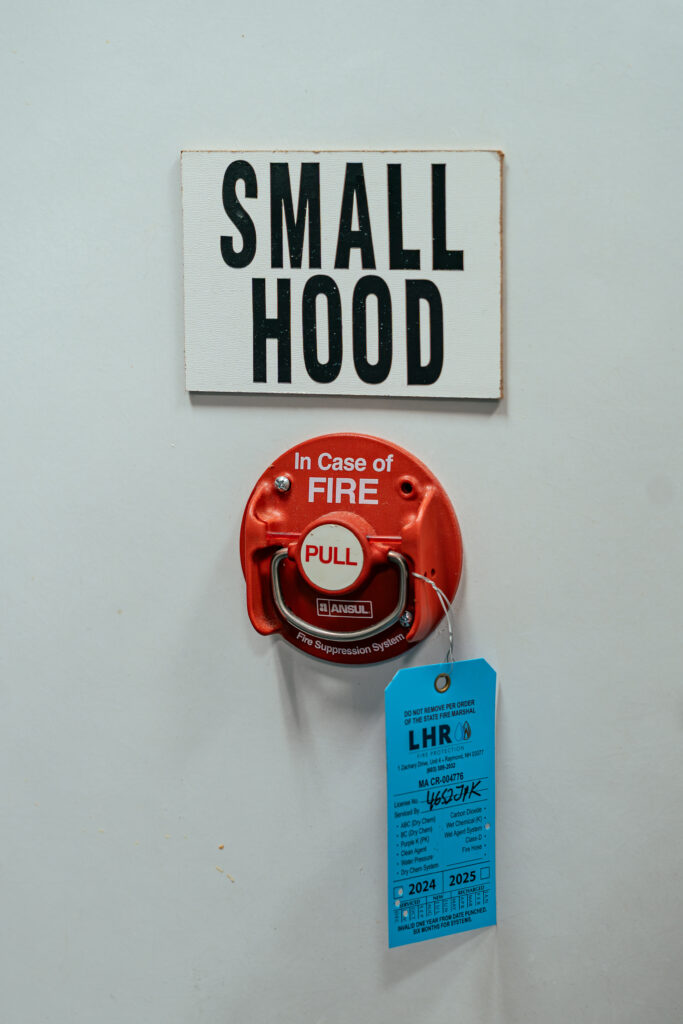
A beeping fire alarm can be annoying, especially at night. Still, some quick fixes can create bigger safety risks.
Avoid these mistakes:
Do Not Remove the Battery and Walk Away
Removing the battery may stop the noise, but it also stops the protection.
If there is a fire later, the alarm may not sound.
Do Not Ignore Repeated Chirping
Repeated chirping is a warning. It means the alarm needs attention.
Ignoring it can leave the building with an unreliable alarm.
Do Not Cover the Alarm
Never cover a smoke alarm with tape, plastic, cloth, or any other material.
That can prevent the alarm from detecting smoke or heat properly.
Do Not Paint Over the Alarm
Paint can block vents and damage the sensor.
If an alarm has been painted, it may need to be replaced.
Do Not Silence a Commercial Fire Alarm Panel Without Follow-Up
Silencing the panel only stops the sound. It does not fix the trouble condition.
If the issue is not resolved, the system may remain impaired.
Do Not Assume Every Beep Is a False Alarm
A chirp often points to maintenance, but a full alarm should always be treated seriously.
When in doubt, evacuate first.
When to Call a Fire Alarm Professional
You should call a fire alarm professional if:
- The alarm keeps beeping after a new battery
- The alarm is hardwired and will not reset
- Multiple alarms are beeping at once
- The fire alarm panel shows a trouble signal
- A commercial system has a low battery warning
- There is a ground fault, disabled zone, or communication issue
- The system is connected to sprinklers or monitoring
- Your building is overdue for inspection
- You manage a business, multi-family building, restaurant, school, warehouse, or facility
Commercial properties should be especially careful. Fire alarm systems may be tied to local code requirements, insurance expectations, occupancy rules, and inspection documentation.
LHR’s guide to fire safety compliance explains why regular inspection and documentation matter for protecting both people and property.
How to Prevent Fire Alarm Beeping in the Future
The best way to stop future beeping is to maintain your alarms before there is a problem.
Here are simple steps that help:
- Test alarms monthly
- Replace batteries at least once a year if required
- Replace smoke alarms every 10 years
- Keep alarms clean and free from dust
- Avoid painting or covering alarms
- Keep alarms away from heavy steam or cooking fumes when possible
- Schedule inspections for commercial fire alarm systems
- Keep service records updated
- Address panel trouble signals quickly
Smoke alarms work best when they are installed, tested, and maintained properly. USFA recommends monthly testing, yearly battery replacement for alarms that need batteries, and replacing smoke alarms every 10 years.
For commercial buildings, fire alarms are only one part of a complete life-safety plan. Sprinklers, extinguishers, emergency lights, and exit signs all need attention too. LHR also provides emergency lighting services to help buildings stay safer and inspection-ready.
Need Fire Alarm Help in NH, MA, or ME?
If your fire alarm keeps beeping, your panel is showing a trouble signal, or your system is overdue for inspection, LHR Fire Protection can help.
Our team provides fire alarm installation, inspection, testing, repair, and maintenance for commercial and residential properties across New Hampshire, northern Massachusetts, and southern Maine.
Whether you are dealing with a beeping panel, a system issue, or routine fire alarm service, we can inspect the system and recommend the right next step.
Contact LHR Fire Protection today to schedule fire alarm service.
FAQs About Fire Alarm Beeping
Why is my fire alarm beeping?
Your fire alarm may be beeping because of a low battery, dust inside the unit, an expired alarm, a power issue, a loose battery drawer, or a fire alarm panel trouble signal.
How do I turn off a fire alarm beep?
First, check for smoke, fire, or danger. If there is no emergency, replace the battery, clean the alarm, press the silence or reset button, and check the manufacture date. If it keeps beeping, replace the unit or call a professional.
How do I turn off fire alarm beeping after changing the battery?
Make sure the battery is installed correctly and the battery drawer is fully closed. Then press and hold the reset or test button. If the alarm still beeps, the unit may be expired or faulty.
How do I turn off a hardwired fire alarm?
Check for danger first. Then replace the backup battery, press the silence or reset button, and check whether another interconnected alarm is causing the issue. If it keeps beeping, call a professional.
Why is my commercial fire alarm panel beeping?
A commercial fire alarm panel may beep because of a trouble signal, low backup battery, power loss, wiring fault, communication failure, disabled zone, dirty detector, or sprinkler supervisory issue.
Is it safe to remove the battery from a beeping fire alarm?
You can remove the battery only to replace it. Do not leave the alarm without a working battery. A disabled fire alarm cannot protect the building during a fire.
When should I replace a smoke alarm?
Smoke alarms should generally be replaced every 10 years, or sooner if they do not work properly when tested. Check the manufacture date on the alarm.