
Fire extinguisher inspection helps make sure your extinguishers are accessible, charged, undamaged, and ready to use during an emergency. For workplaces, OSHA states that portable fire extinguishers should be visually inspected monthly and receive an annual maintenance check.
That is the quick answer.
In most buildings, fire extinguishers should be checked in two ways:
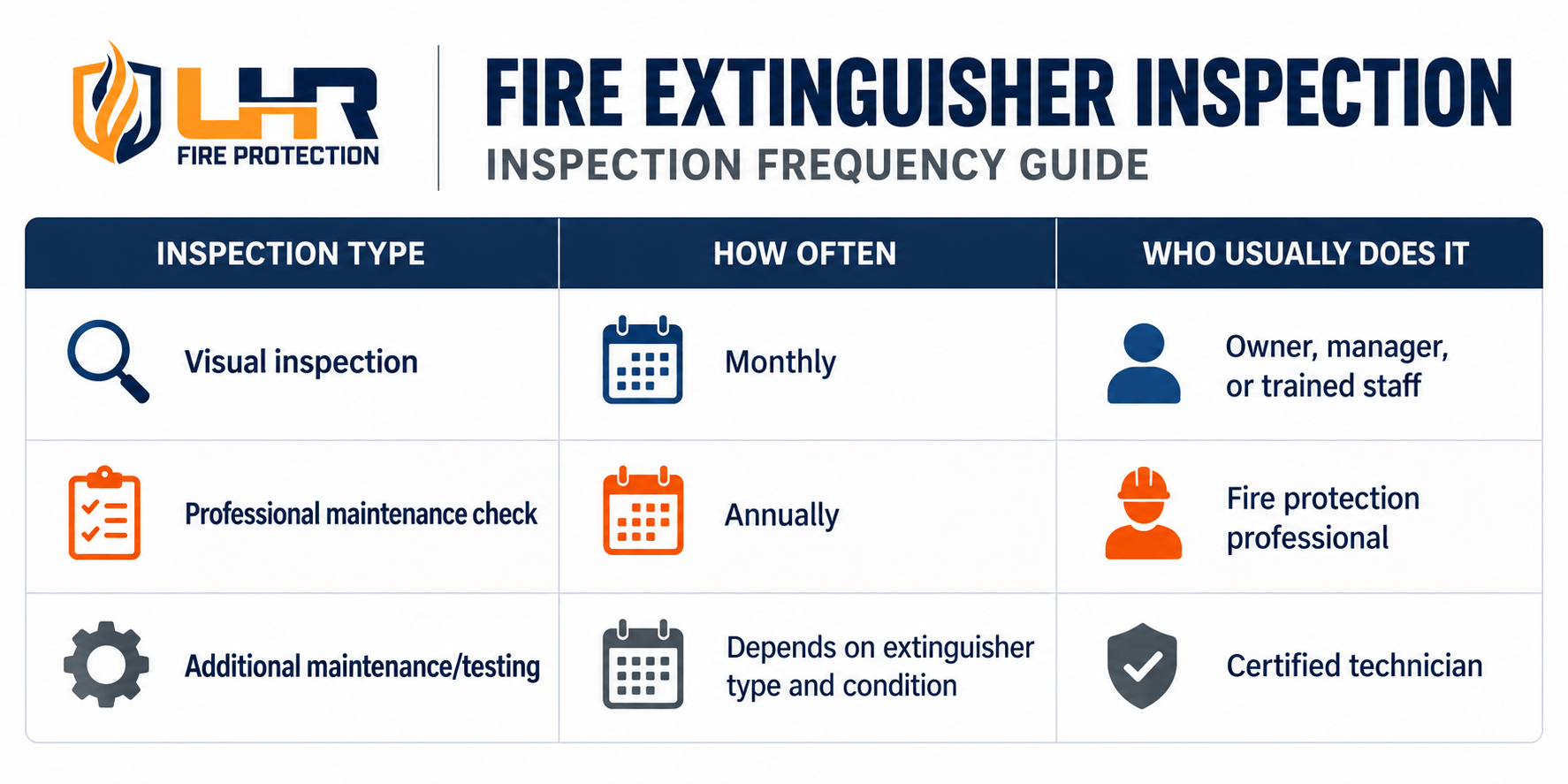
A monthly check helps catch obvious issues like missing extinguishers, low pressure, blocked access, broken seals, or visible damage. Annual service goes deeper and should be handled by a qualified fire extinguisher professional.
For businesses, restaurants, offices, warehouses, apartment buildings, and commercial properties, regular fire extinguisher inspection is not just a box to check. It helps protect people, property, and compliance records. LHR Fire Protection provides fire extinguisher services across New Hampshire, northern Massachusetts, and southern Maine.
Why Fire Extinguisher Inspection Matters
A fire extinguisher is only useful if it works when someone needs it.
An extinguisher may look fine from a distance but still have problems. The pressure may be low. The pin may be missing. The hose may be blocked. The tag may be expired. The extinguisher may be in the wrong place or blocked by storage, furniture, or equipment.
Regular inspection helps confirm that each extinguisher is:
- In the correct location
- Easy to see and reach
- Properly charged
- Free from obvious damage
- Matched to the fire hazards nearby
- Marked with a current inspection tag
- Ready for emergency use
For commercial properties, inspections also support fire code compliance, insurance requirements, workplace safety, and fire marshal reviews. LHR’s guide to fire safety compliance explains why routine testing, inspection, and documentation matter for safer buildings.
How Often Should Fire Extinguishers Be Inspected?
Fire extinguishers should be visually checked at least monthly and professionally serviced at least once a year. OSHA requires employers to visually inspect portable fire extinguishers monthly and make sure they receive an annual maintenance check.
That answers several common questions at once:
- How often do fire extinguishers need to be inspected? Monthly visual checks and annual maintenance.
- How often should fire extinguishers be inspected? At least monthly for visual checks.
- How often must a fire extinguisher be inspected? For workplaces, OSHA requires monthly visual inspection and annual maintenance.
- How often does fire extinguishers need inspected? The better wording is “How often do fire extinguishers need to be inspected?” The answer is monthly visual checks and annual professional maintenance.
Some extinguishers may need more frequent checks depending on their location. For example, extinguishers in busy, dusty, humid, corrosive, or high-risk areas may need extra attention.
Monthly Fire Extinguisher Checks vs. Annual Service
Monthly checks and annual service are not the same.
A monthly check is a quick visual review. It confirms that the extinguisher is present, accessible, charged, and not obviously damaged.
Annual service is more detailed. It is usually completed by a fire protection professional who can inspect, service, tag, recharge, repair, or recommend replacement when needed.
Here is the difference:
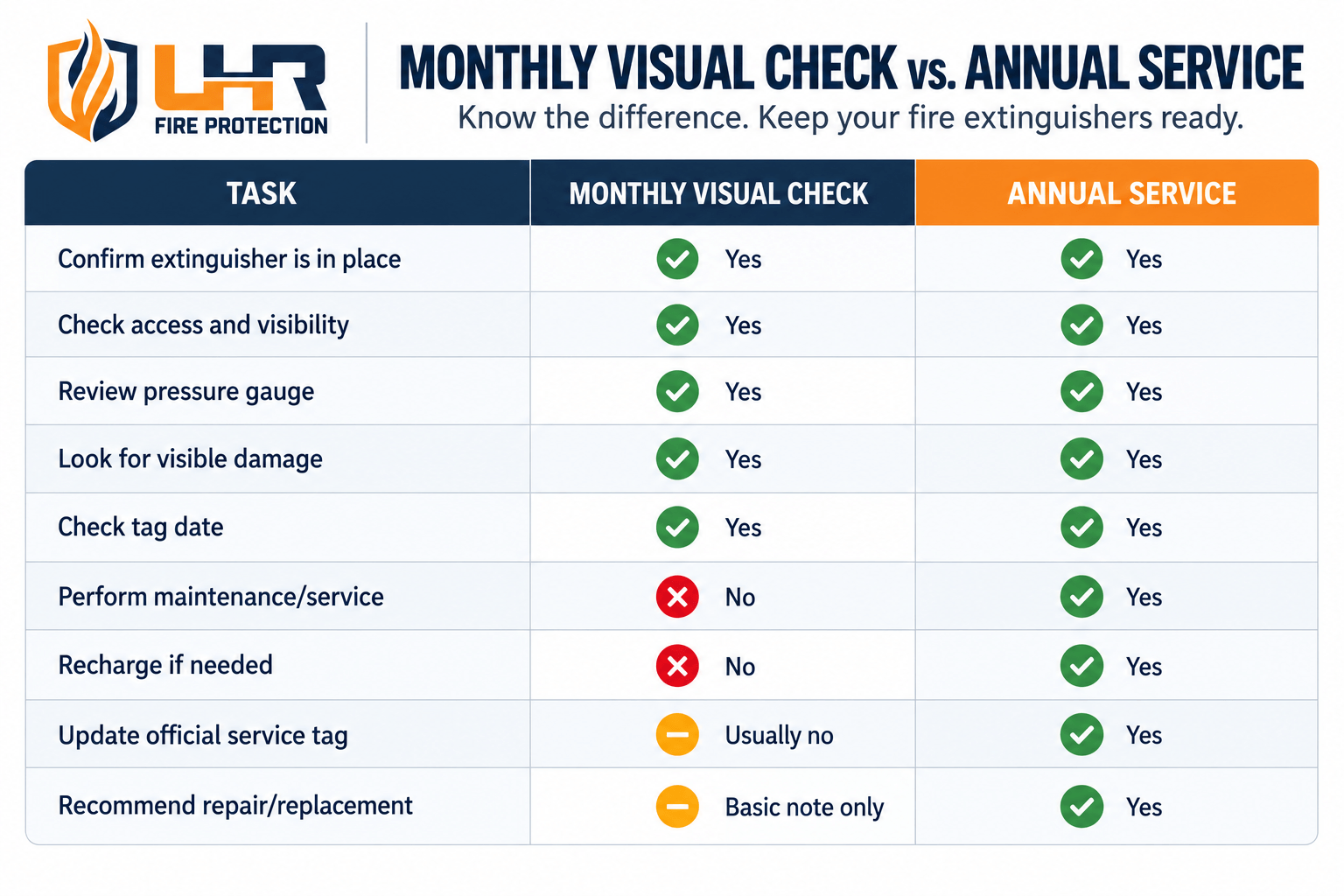
The monthly check helps you spot problems early. Annual service helps confirm the extinguisher is properly maintained and documented.
Fire Extinguisher Inspection Checklist
Use this fire extinguisher inspection checklist for monthly visual reviews.
1. Confirm the Extinguisher Is in the Right Location
Make sure the extinguisher is where it is supposed to be.
It should not be moved to another room, hidden in a cabinet, or left on the floor unless that is its designated setup.
If employees, tenants, or visitors expect an extinguisher to be in a specific place, it needs to stay there.
2. Make Sure It Is Visible and Accessible
The extinguisher should be easy to see and easy to reach.
Check that it is not blocked by:
- Boxes
- Furniture
- Shelving
- Equipment
- Trash bins
- Stockroom items
- Doors or temporary barriers
During a fire, every second matters. A blocked extinguisher can delay response and increase risk.
3. Check the Pressure Gauge
Many fire extinguishers have a pressure gauge.
The needle should usually be in the green zone. If it is too low or too high, the extinguisher may not work properly.
Do not ignore a gauge outside the proper range. It may need professional service, recharge, or replacement.
4. Check the Pin and Tamper Seal
The safety pin should be in place, and the tamper seal should be intact.
A missing pin or broken seal may mean the extinguisher was used, handled, or tampered with.
If either one is missing or damaged, the extinguisher should be checked by a professional.
5. Look for Visible Damage
Inspect the outside of the extinguisher.
Look for:
- Dents
- Cracks
- Rust
- Corrosion
- Leaks
- Chemical residue
- Missing parts
- Loose handles
- Damaged hose or nozzle
Physical damage can affect performance. If the cylinder is damaged, do not rely on it.
6. Check the Hose and Nozzle
Make sure the hose and nozzle are not cracked, clogged, loose, or missing.
Dust, insects, debris, or damage can block discharge. If the extinguisher cannot release properly, it may fail during use.
7. Make Sure the Label Is Readable
The label should be clear and easy to read.
It should show:
- Extinguisher class
- Operating instructions
- Ratings
- Safety information
If the label is torn, missing, painted over, or unreadable, the extinguisher may need service or replacement.
8. Check the Fire Extinguisher Inspection Tag
The inspection tag should be attached and current.
Look for the latest service date, technician initials or company mark, and any notes. If the tag is missing or expired, schedule service.
9. Confirm It Matches the Fire Hazard
The extinguisher should match the risks in that area.
For example:
- Offices often use ABC extinguishers.
- Commercial kitchens may need Class K extinguishers.
- Electrical rooms may need extinguishers rated for electrical equipment.
- Industrial spaces may need special extinguishers based on stored materials.
If you are unsure which extinguisher class your building needs, LHR’s guide to fire extinguisher types can help you understand the differences.
10. Document the Check
Monthly inspections should be documented.
Depending on your building’s process, this may mean signing the tag, updating an inspection log, or recording the check digitally.
Documentation helps show that inspections are being completed consistently.
What Are Fire Extinguisher Inspection Tags?
Fire extinguisher inspection tags are the small tags attached to extinguishers to show when they were last checked or serviced.
A tag usually includes:
- Inspection or service date
- Technician name or initials
- Service company
- Extinguisher location or ID
- Type of service performed
- Notes or status
- Next service due date
Inspection tags are important because they give property owners, managers, inspectors, and technicians a quick service history.
If a fire marshal, safety officer, insurance representative, or property manager checks the building, an expired or missing tag can quickly become an issue.
A current tag does not just look better. It helps show that the extinguisher is part of an active safety and maintenance plan.
What Happens During Professional Fire Extinguisher Inspection Services?
Professional fire extinguisher inspection services are more detailed than a quick monthly check.
A technician may:
- Confirm extinguisher location and accessibility
- Check the pressure or charge level
- Inspect the cylinder condition
- Check the hose, nozzle, handle, and pin
- Look for corrosion, dents, leakage, or damage
- Confirm the extinguisher type is right for the hazard
- Review the inspection tag
- Recharge the extinguisher if needed
- Replace damaged or expired extinguishers
- Recommend additional maintenance or testing
- Update the inspection tag after service
For businesses, professional service also helps keep records organized. That can matter during fire inspections, insurance reviews, and internal safety audits.
LHR Fire Protection provides fire extinguisher inspection and maintenance for commercial and residential properties that need reliable, documented service.
Common Problems Found During Fire Extinguisher Inspections
Fire extinguisher inspections often uncover small issues that are easy to miss during a busy workday.
Common problems include:
- Expired inspection tags
- Missing inspection tags
- Low pressure
- Overcharged pressure gauge
- Missing pin
- Broken tamper seal
- Blocked access
- Extinguisher moved from its assigned location
- Rust or corrosion
- Dented cylinder
- Cracked hose
- Clogged nozzle
- Unreadable label
- Wrong extinguisher type for the area
- Extinguisher mounted too low, too high, or not secured
- Evidence of previous use
- Outdated or damaged equipment
These issues may seem small, but they can affect whether the extinguisher works when needed.
When Should a Fire Extinguisher Be Recharged?
A fire extinguisher may need to be recharged when it has been used, partially discharged, or shows low pressure.
Recharge may be needed if:
- The extinguisher was used, even briefly
- The pressure gauge is low
- The tamper seal is broken
- There is evidence of discharge
- The unit fails inspection
- A technician recommends recharge after service
Even a short discharge can reduce pressure and leave the extinguisher unable to perform properly.
Do not put a used extinguisher back on the wall and assume it is ready. Have it inspected and recharged or replaced.
When Should a Fire Extinguisher Be Replaced?
Some extinguishers can be recharged or repaired. Others should be replaced.
Replacement may be needed if:
- The cylinder is badly dented
- There is heavy rust or corrosion
- The hose or nozzle is damaged
- The label is unreadable
- The extinguisher is obsolete
- It fails required testing
- It is a disposable unit that has been used
- It no longer matches the hazard in that area
- A technician determines it is unsafe or unreliable
A damaged extinguisher is not worth the risk. If it may not work during an emergency, replace it.
Fire Extinguisher Inspection for Businesses
Businesses have more to consider than simply owning an extinguisher.
They need to think about:
- Correct extinguisher type
- Correct placement
- Clear access
- Visible signage
- Current inspection tags
- Employee awareness
- Service documentation
- Local fire code expectations
- Insurance requirements
- Building-specific hazards
A restaurant, office, warehouse, retail space, apartment building, and industrial facility may all need different fire extinguisher setups.
For example, a restaurant may need Class K extinguishers near cooking equipment, while an office may use ABC extinguishers for common fire risks. A warehouse may need extinguishers placed based on travel distance, hazard type, and layout.
If your building also relies on alarms, sprinklers, emergency lighting, or kitchen hood suppression, extinguisher inspections should be part of a wider safety plan. LHR’s article on fire system inspection explains how regular inspections can help protect people and property.
Fire Extinguisher Inspection Tags: What Property Managers Should Watch For
Property managers should pay close attention to inspection tags because they are one of the easiest things for inspectors to check.
When reviewing tags, look for:
- Current annual service date
- Clear technician initials or company marking
- No missing or damaged tags
- No skipped inspection periods
- Correct extinguisher location or ID
- Notes about recharge, replacement, or deficiencies
If several tags are expired, it may be time to schedule building-wide service.
Keeping tags current can also reduce last-minute stress before inspections, tenant reviews, or insurance walk-throughs.
What Should You Do If a Fire Extinguisher Fails Inspection?
If a fire extinguisher fails inspection, take it seriously.
Depending on the issue, the extinguisher may need to be:
- Recharged
- Repaired
- Replaced
- Repositioned
- Cleaned
- Retagged
- Removed from service
- Swapped with the correct extinguisher type
If the extinguisher is unsafe or unreliable, do not leave it as the only protection in that area.
For commercial properties, document the issue and corrective action. This helps show that the problem was identified and addressed.
How to Keep Fire Extinguishers Inspection-Ready
Keeping extinguishers ready does not have to be complicated.
Use a simple routine:
- Assign someone to complete monthly visual checks.
- Keep extinguishers visible and accessible.
- Do not allow storage to block extinguisher access.
- Report low pressure, broken seals, or damage quickly.
- Keep inspection tags current.
- Schedule annual professional service.
- Train staff not to move extinguishers unnecessarily.
- Review extinguisher placement after renovations or layout changes.
- Match extinguisher types to current hazards.
For businesses, these small habits help reduce risk and keep safety responsibilities from piling up.
Need Fire Extinguisher Inspection Services in NH, MA, or ME?
If your fire extinguisher tags are expired, your extinguishers have not been checked recently, or you are unsure whether your building has the right equipment, LHR Fire Protection can help.
Our team provides fire extinguisher inspection, maintenance, recharge, and service for homes, businesses, restaurants, offices, warehouses, apartment buildings, and commercial properties.
We serve New Hampshire, northern Massachusetts, and southern Maine with practical, reliable fire protection support.
Contact LHR Fire Protection today to schedule fire extinguisher inspection.
FAQs About Fire Extinguisher Inspection
How often do fire extinguishers need to be inspected?
Fire extinguishers should be visually inspected monthly and professionally serviced at least once a year. Some extinguishers may need additional maintenance or testing depending on their type, condition, and location.
How often should fire extinguishers be inspected?
In workplaces, OSHA requires monthly visual inspection and annual maintenance checks for portable fire extinguishers.
How often must a fire extinguisher be inspected?
A fire extinguisher should be visually inspected every month and receive annual maintenance. Additional testing may be required depending on the extinguisher type and applicable requirements.
What is included in a fire extinguisher inspection checklist?
A fire extinguisher inspection checklist usually includes location, access, visibility, pressure gauge, pin, tamper seal, hose, nozzle, label, physical condition, inspection tag, and correct extinguisher class.
What are fire extinguisher inspection tags?
Fire extinguisher inspection tags show the service history of the extinguisher. They usually include the inspection date, technician or company, service status, and next service due date.
Who can perform fire extinguisher inspection services?
Monthly visual checks may be completed by trained staff or building personnel. Annual maintenance and service should be performed by a qualified fire protection professional.
What happens if a fire extinguisher inspection tag is expired?
An expired tag may mean the extinguisher is overdue for service. The extinguisher should be inspected by a professional and retagged after service is completed.
Do fire extinguishers need to be recharged after use?
Yes. If a fire extinguisher has been used, even briefly, it should be inspected and recharged or replaced before being returned to service.