
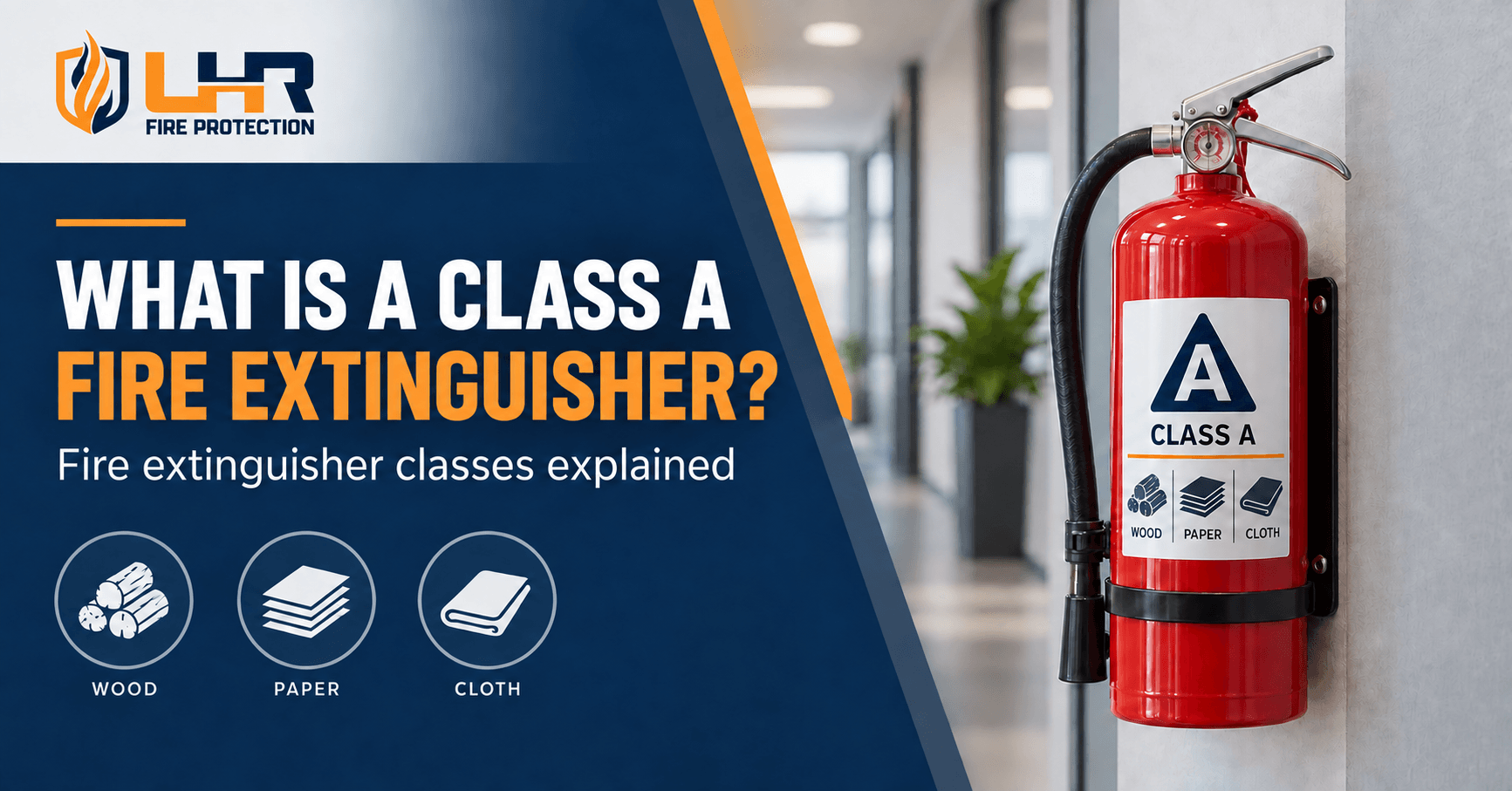
A Class A fire extinguisher is used for ordinary combustible materials such as wood, paper, cloth, cardboard, trash, rubber, and some plastics. These are some of the most common fire risks found in homes, offices, schools, warehouses, and many commercial buildings.
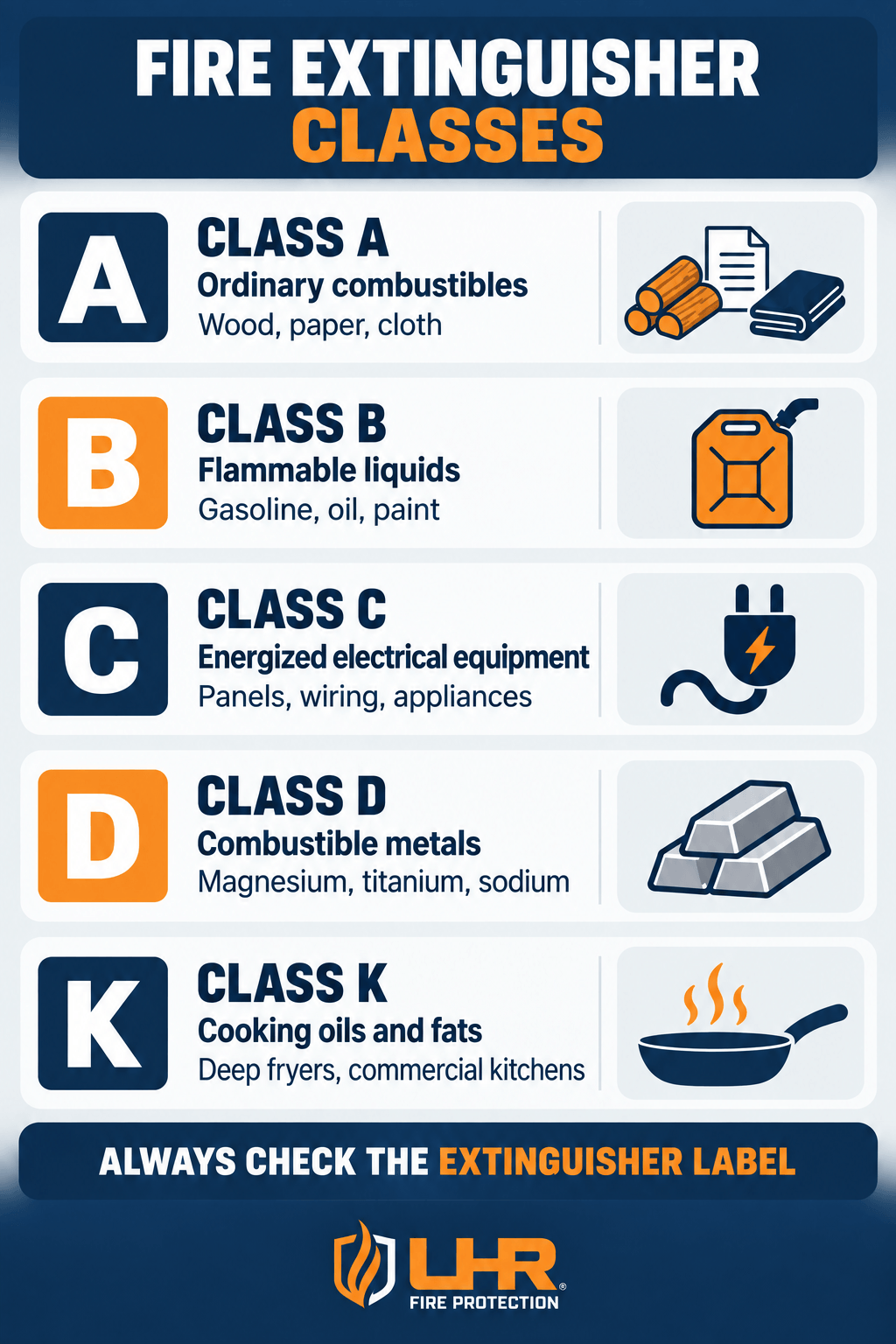
Fire extinguisher classes tell you what type of fire an extinguisher is designed to fight. The main fire extinguisher classes are Class A, Class B, Class C, Class D, and Class K. Each class matches a different type of fire.
Here is the quick answer
Choosing the right extinguisher matters. The wrong type may not control the fire and can create additional danger. For businesses, LHR Fire Protection provides fire extinguisher services to help properties stay safer, prepared, and inspection-ready.
What Is a Fire Extinguisher Class?
A fire extinguisher class is a rating that tells you what kind of fire the extinguisher is made to handle.
The class is based on the material that is burning, not just the size of the fire.
For example, a small trash fire and a small grease fire may look similar at first, but they need different extinguishing methods. A Class A extinguisher is designed for ordinary combustibles, while a Class K extinguisher is designed for cooking oils and fats.
The U.S. Fire Administration identifies five primary extinguisher classes: Class A for ordinary materials like cloth, wood, and paper; Class B for flammable liquids; Class C for electrical equipment; Class D for metals; and Class K for cooking oils and fats.
What Is a Class A Fire Extinguisher?
A Class A fire extinguisher is designed for fires involving ordinary combustible materials.
These are materials that leave ash after burning. That is an easy way to remember Class A: A is for ash.
Class A fires commonly involve:
- Wood
- Paper
- Cloth
- Cardboard
- Trash
- Rubber
- Some plastics
- Furniture
- Packaging materials
A Class A type fire extinguisher is commonly found in homes, offices, schools, retail buildings, warehouses, and other places where ordinary combustible materials are present.
What Are Class A Fire Extinguishers Used For?
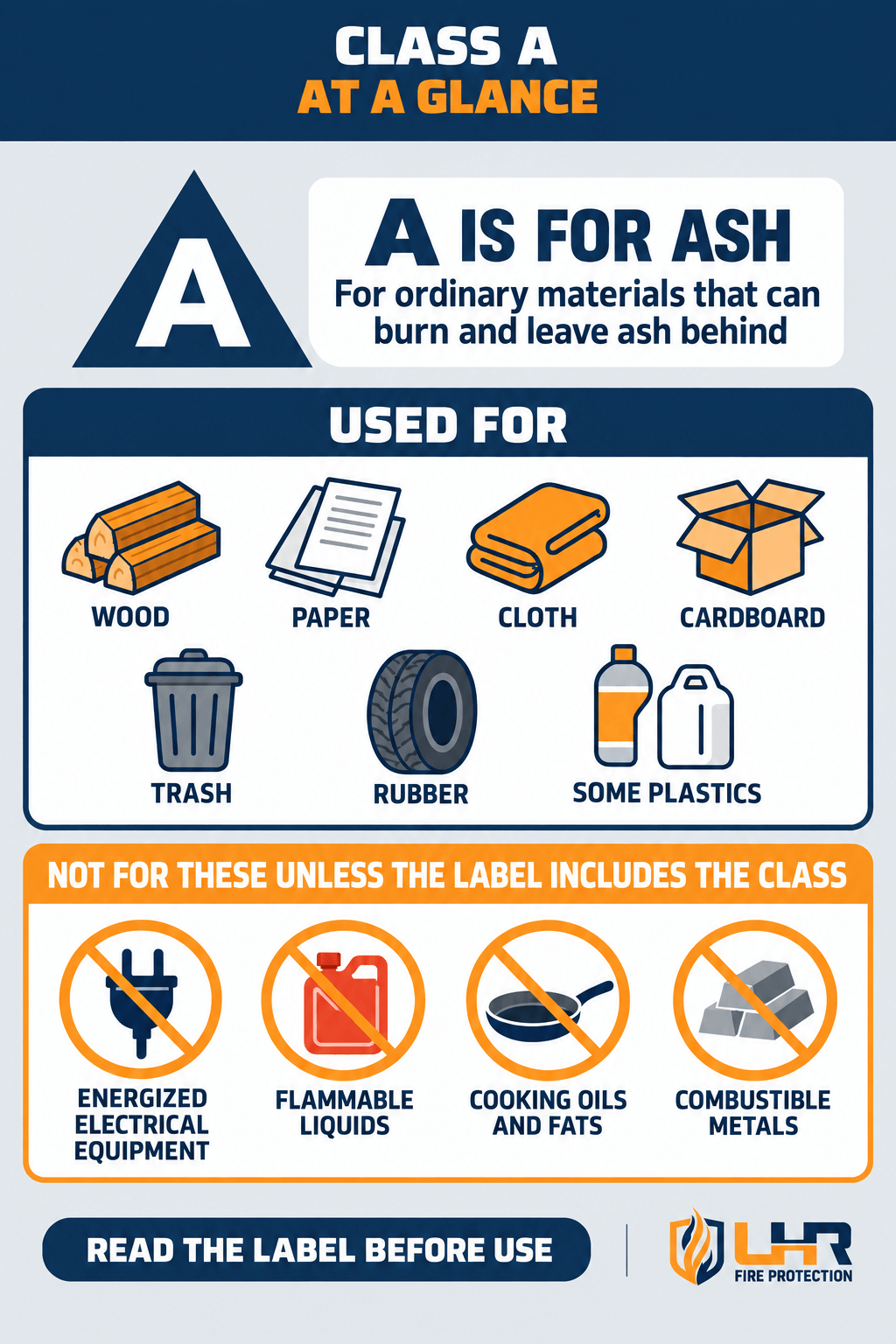
Class A fire extinguishers are used for fires involving everyday materials that can burn and leave ash behind.
Common examples include:
- A trash can fire
- Burning paper or files
- Wood furniture catching fire
- Cloth or fabric burning
- Cardboard boxes igniting
- Some plastic materials burning
- Office supplies catching fire
A Class A fire extinguisher is not designed for every fire. It should not be used as the primary extinguisher for grease fires, flammable liquid fires, electrical fires, or combustible metal fires unless the extinguisher label clearly shows it is rated for those classes too.
That is why many buildings use multipurpose extinguishers, such as ABC extinguishers, in general areas.
How Does a Class A Fire Extinguisher Work?
A Class A fire extinguisher works by removing heat from the fire or interrupting the burning process.
Some Class A extinguishers use water. Others use dry chemical agents that can work on more than one fire class.
For ordinary combustible fires, the goal is to cool the burning material and stop it from spreading.
However, water-based extinguishers are not safe for every fire. Water should not be used on energized electrical equipment or certain flammable liquid fires because it can increase the danger.
Always check the extinguisher label before use.
What Is a Class B Fire Extinguisher Used For?
A Class B fire extinguisher is used for fires involving flammable and combustible liquids.
These may include:
- Gasoline
- Oil
- Grease
- Kerosene
- Paint
- Oil-based paints
- Solvents
- Some cleaning chemicals
Class B fires behave differently from Class A fires. Instead of burning solid materials like wood or paper, they involve liquid fuels that can spread quickly.
Class B extinguishers usually work by smothering the fire or interrupting the chemical reaction. The goal is to stop the fire from getting oxygen or continuing to burn.
Class B extinguishers are often used in garages, workshops, mechanical areas, industrial spaces, and places where flammable liquids are stored or used.
What Is a Class C Fire Extinguisher Used For?
A Class C fire extinguisher is used for fires involving energized electrical equipment.
This may include:
- Electrical panels
- Wiring
- Circuit breakers
- Appliances
- Motors
- Computers
- Servers
- Office equipment
- Machinery
The important word is energized. Class C applies when the equipment still has live electrical power.
Class C extinguishers use nonconductive agents to reduce the risk of electrical shock. UCLA Health’s fire safety guidance notes that Class C fires involve electrical equipment, appliances, and wiring, and warns not to use water on Class C electrical fires.
Once the power source is safely shut off, the fire may become another class depending on what material is burning. For example, if an electrical fire spreads to paper or furniture after the power is off, the remaining fire may involve Class A materials.
For commercial buildings, electrical rooms, server areas, offices, and mechanical spaces should have the correct extinguisher type available and properly maintained.
What Is a Class D Fire Extinguisher?
A Class D fire extinguisher is used for combustible metal fires.
These are not common in most homes or standard offices, but they can be a serious concern in certain industrial, laboratory, or manufacturing settings.
Class D fires may involve metals such as:
- Magnesium
- Titanium
- Sodium
- Potassium
- Aluminum dust
- Zirconium
Combustible metal fires can react dangerously with the wrong extinguishing agent. Some can react with water and become more hazardous.
That is why Class D extinguishers use special agents designed for specific metal hazards. Facilities that work with combustible metals should have their hazards reviewed carefully.
What Is a Class K Fire Extinguisher?
A Class K fire extinguisher is used for fires involving cooking oils, cooking grease, and animal fats.
These fires are most common in restaurants, commercial kitchens, cafeterias, food trucks, and other food service environments.
Class K extinguishers are designed for high-temperature cooking fires, especially those involving deep fryers and commercial cooking equipment. NFPA defines a Class K portable fire extinguisher as one designed to extinguish fires involving animal fats or cooking oils.
Class K extinguishers usually use a wet chemical agent. This helps cool the hot oil, smother the fire, and reduce the chance of reignition.
For restaurants and commercial kitchens, Class K extinguishers often work alongside hood suppression systems. If your kitchen needs support, LHR provides kitchen hood fire suppression services for commercial properties.
What Does ABC Mean on a Fire Extinguisher?
ABC on a fire extinguisher means the extinguisher is rated for Class A, Class B, and Class C fires.
That means it can be used on:
- Class A: ordinary combustibles like wood, paper, and cloth
- Class B: flammable liquids like gasoline, oil, and grease
- Class C: energized electrical equipment
ABC extinguishers are common because they cover several everyday fire risks. You may see them in offices, homes, schools, warehouses, hallways, and commercial spaces.
However, an ABC extinguisher is not the right choice for every situation. It is not the same as a Class K extinguisher for commercial cooking oil fires, and it is not designed for combustible metal fires unless the label specifically says so.
The label matters.
Class A vs. Class B vs. Class C Fire Extinguishers
Here is a simple way to understand the difference:
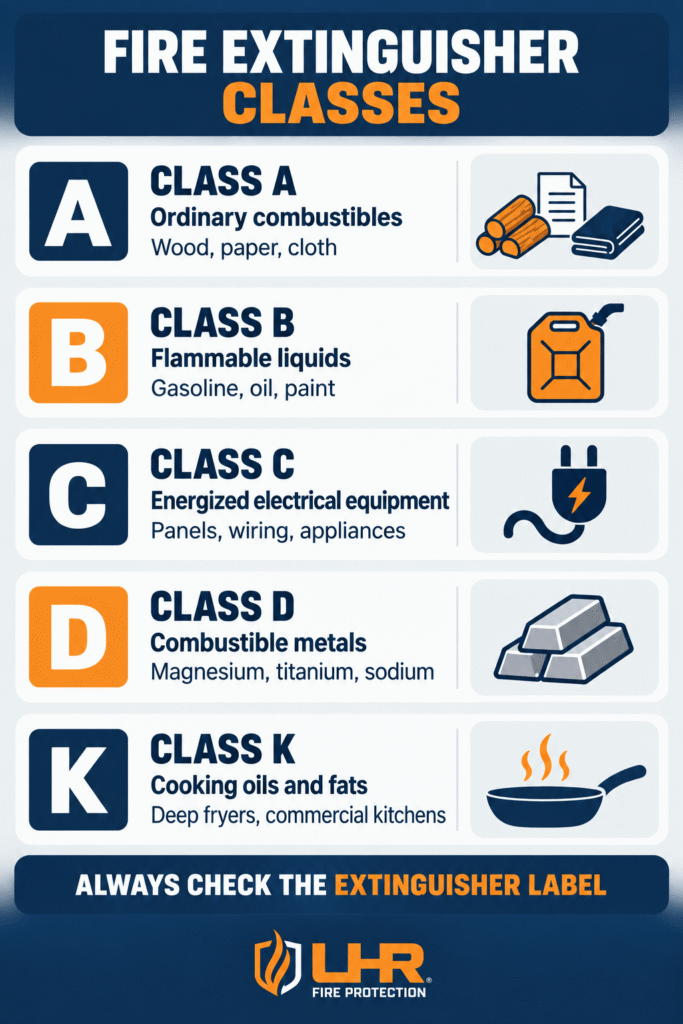
A Class A fire extinguisher is right for materials like paper, wood, and cloth. A Class B extinguisher is right for flammable liquid fires. A Class C fire extinguisher is right for energized electrical fires.
Many general-purpose extinguishers carry more than one rating, but you should still read the label before using one.
How to Choose the Right Fire Extinguisher Class
The right fire extinguisher depends on the hazards in your building.
A small office may need a different extinguisher setup than a restaurant, warehouse, manufacturing facility, school, or apartment building.
When choosing fire extinguishers, consider:
- What materials are stored or used in the building
- Whether flammable liquids are present
- Whether electrical equipment creates fire risks
- Whether there is a commercial kitchen
- Whether combustible metals are used
- Building size and layout
- Occupancy type
- Local fire code requirements
- Inspection and maintenance needs
For many commercial properties, the answer is not just “buy an extinguisher.” Placement, rating, visibility, accessibility, inspection tags, and maintenance records also matter.
If you are unsure what extinguisher class your building needs, a professional fire extinguisher inspection and maintenance service can help identify the right equipment and check whether your existing extinguishers are ready to use.
When Should Fire Extinguishers Be Inspected?
Fire extinguishers should be checked regularly to make sure they are accessible, charged, visible, and in usable condition.
A basic visual check may include:
- Is the extinguisher in the correct location?
- Is it easy to see and reach?
- Is the pressure gauge in the proper range?
- Is the pin in place?
- Is the tamper seal intact?
- Is there visible damage, corrosion, or leakage?
- Is the inspection tag current?
- Is the extinguisher label readable?
For businesses, inspection and documentation are especially important. Fire extinguishers are part of a broader safety and compliance plan, and missing or expired inspection tags can create problems during a fire marshal visit, insurance review, or safety audit.
For more guidance on maintaining safer buildings, LHR’s guide to fire safety compliance explains why regular testing, inspections, and records matter.
Common Fire Extinguisher Mistakes to Avoid
Choosing the wrong fire extinguisher class is one of the biggest mistakes property owners can make.
Other common mistakes include:
- Using water on an electrical fire
- Using the wrong extinguisher on a grease fire
- Blocking access to extinguishers
- Forgetting to inspect extinguishers
- Keeping expired or damaged extinguishers
- Assuming all extinguishers work on all fires
- Not training employees on basic extinguisher safety
- Placing extinguishers too far from likely hazard areas
- Ignoring missing inspection tags
A fire extinguisher is only helpful if it is the right type, in the right place, and ready to use.
When Should You Use a Fire Extinguisher?
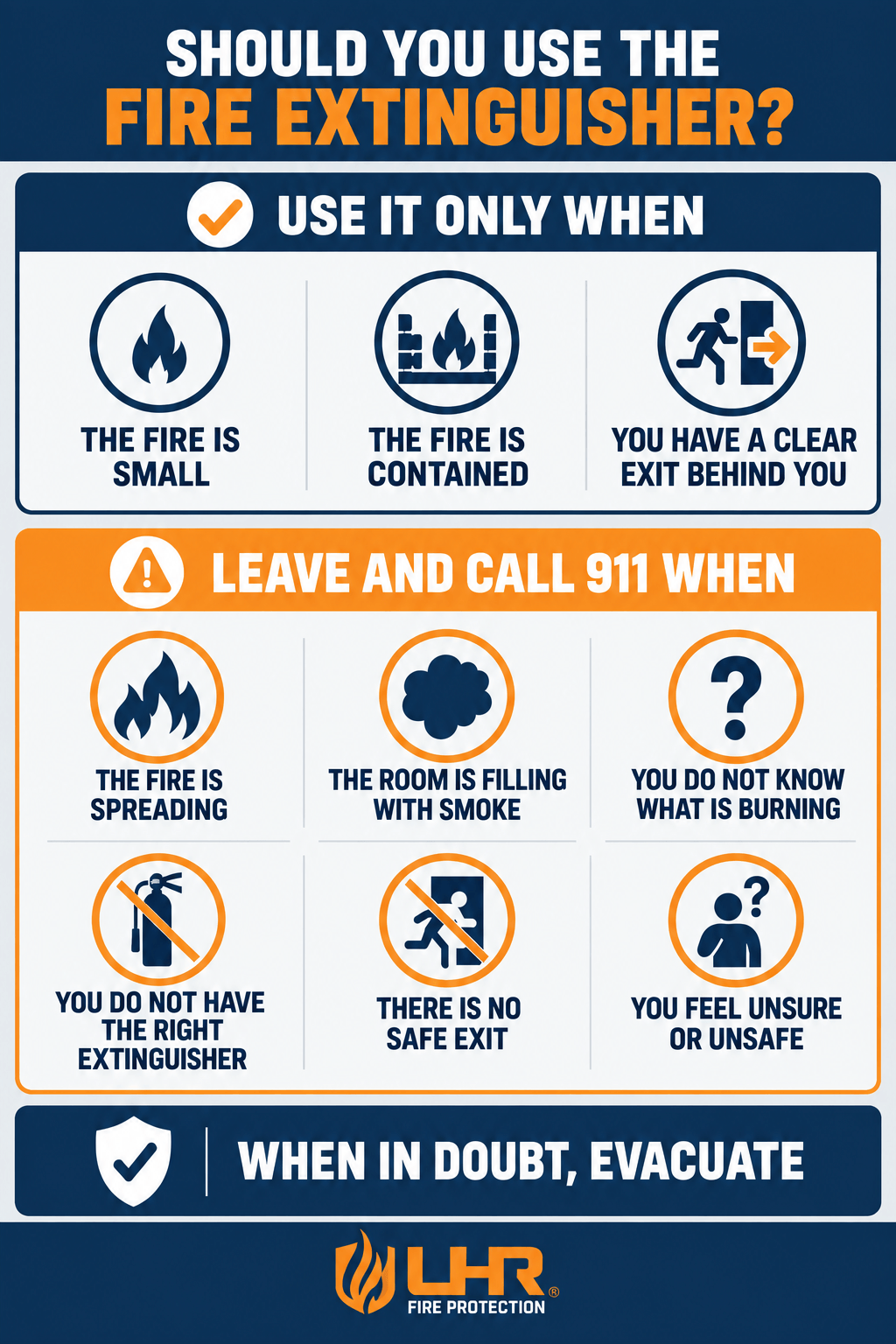
Only use a fire extinguisher if the fire is small, contained, and you have a clear exit behind you.
Do not try to fight a fire if:
- The fire is spreading quickly
- You do not know what is burning
- The room is filling with smoke
- You do not have the right extinguisher
- You have no safe exit path
- You have not called emergency services
- You feel unsure or unsafe
When in doubt, leave the building and call 911.
A fire extinguisher is meant for small, early-stage fires. It is not a substitute for evacuation, emergency response, or a complete fire protection system.
Why Fire Extinguisher Classes Matter for Businesses
For businesses, fire extinguisher classes are more than a helpful label. They help protect employees, customers, tenants, inventory, equipment, and property.
The wrong extinguisher can delay response, increase damage, or put someone at risk.
Different businesses may need different extinguisher setups:
- Offices may need ABC extinguishers for common hazards.
- Restaurants may need Class K extinguishers near cooking equipment.
- Warehouses may need extinguishers based on stored materials.
- Industrial facilities may need specialized extinguishers for flammable liquids or metals.
- Retail spaces may need extinguishers placed for easy access and code compliance.
- Apartment buildings may need extinguishers in shared areas based on local requirements.
LHR’s article on fire extinguisher types also provides a helpful overview of different extinguisher options and where they may be used.
Fire Extinguisher Classes and Types of Fire
Fire extinguisher classes are closely connected to the type of fire you may face.
For example, Class A fires involve ordinary combustibles. Class B fires involve flammable liquids. Class C fires involve electrical equipment. Class K fires involve cooking oils and fats.
Understanding the fire type helps you choose the right extinguisher before an emergency happens.
For a broader safety overview, you can also read LHR’s guide on the types of fire and how different fires should be handled.
Need Help Choosing or Servicing Fire Extinguishers?
If you are unsure which fire extinguisher class your building needs, LHR Fire Protection can help.
Our team provides fire extinguisher inspection, maintenance, and service for homes, businesses, restaurants, commercial properties, and facilities across New Hampshire, northern Massachusetts, and southern Maine.
We can help check your extinguisher types, review placement, inspect current equipment, and support your fire safety needs.
Contact LHR Fire Protection today to schedule fire extinguisher service.
FAQs About Fire Extinguisher Classes
What is a Class A fire extinguisher?
A Class A fire extinguisher is used for ordinary combustible materials such as wood, paper, cloth, cardboard, trash, rubber, and some plastics.
What is a Class A fire extinguisher used for?
A Class A fire extinguisher is used for fires involving everyday solid materials that leave ash behind, such as paper, wood, cloth, cardboard, and some plastics.
What are Class A fire extinguishers used for?
Class A fire extinguishers are used for common combustible fires in homes, offices, schools, warehouses, and commercial buildings.
What is a Class B fire extinguisher used for?
A Class B fire extinguisher is used for fires involving flammable and combustible liquids such as gasoline, oil, grease, paint, and solvents.
What is a Class C fire extinguisher used for?
A Class C fire extinguisher is used for fires involving energized electrical equipment, such as wiring, electrical panels, appliances, computers, and machinery.
What is a Class K fire extinguisher?
A Class K fire extinguisher is designed for fires involving cooking oils and animal fats. It is commonly used in restaurants and commercial kitchens.
What is a fire extinguisher class?
A fire extinguisher class is a rating that shows what type of fire the extinguisher is designed to fight. Common classes include A, B, C, D, and K.
Can one extinguisher cover multiple fire classes?
Yes. Some extinguishers have multiple ratings, such as ABC extinguishers. These can be used on Class A, Class B, and Class C fires, but they are not suitable for every fire hazard.